Lineage
Solo exhibition by Roshni Senapati
Open Sept 5 – Sept 26
Opening Sept 12 2pm – 5pm
Opening speech by Kylie Johnson 2:30pm
Open Friday &
Saturday 10am – 4pm
other times by appointment
MAKERS GALLERY
53 Jackson St
Clayfield QLD 4011
0417 886 185
More About Roshni
Lineage, 2026
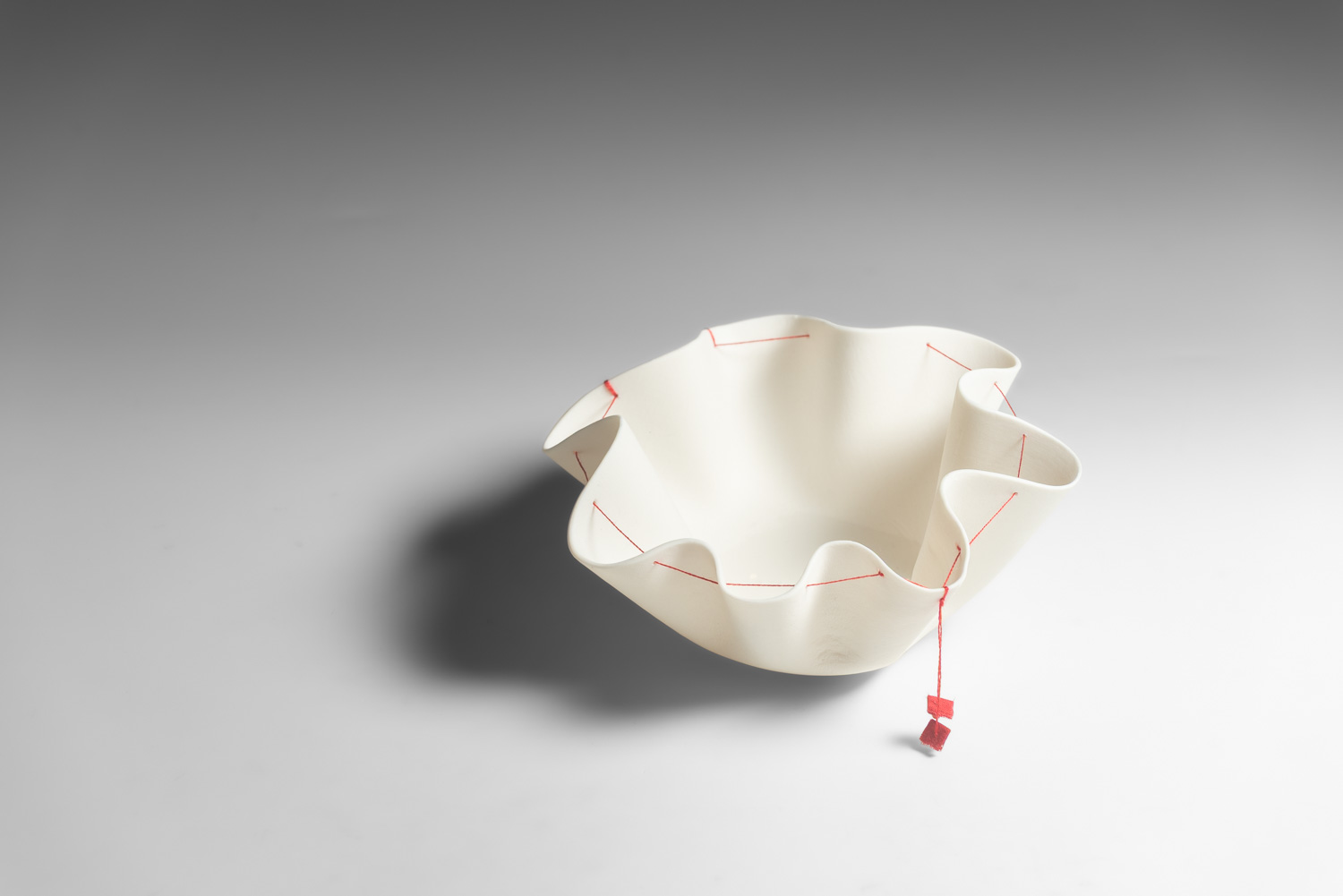
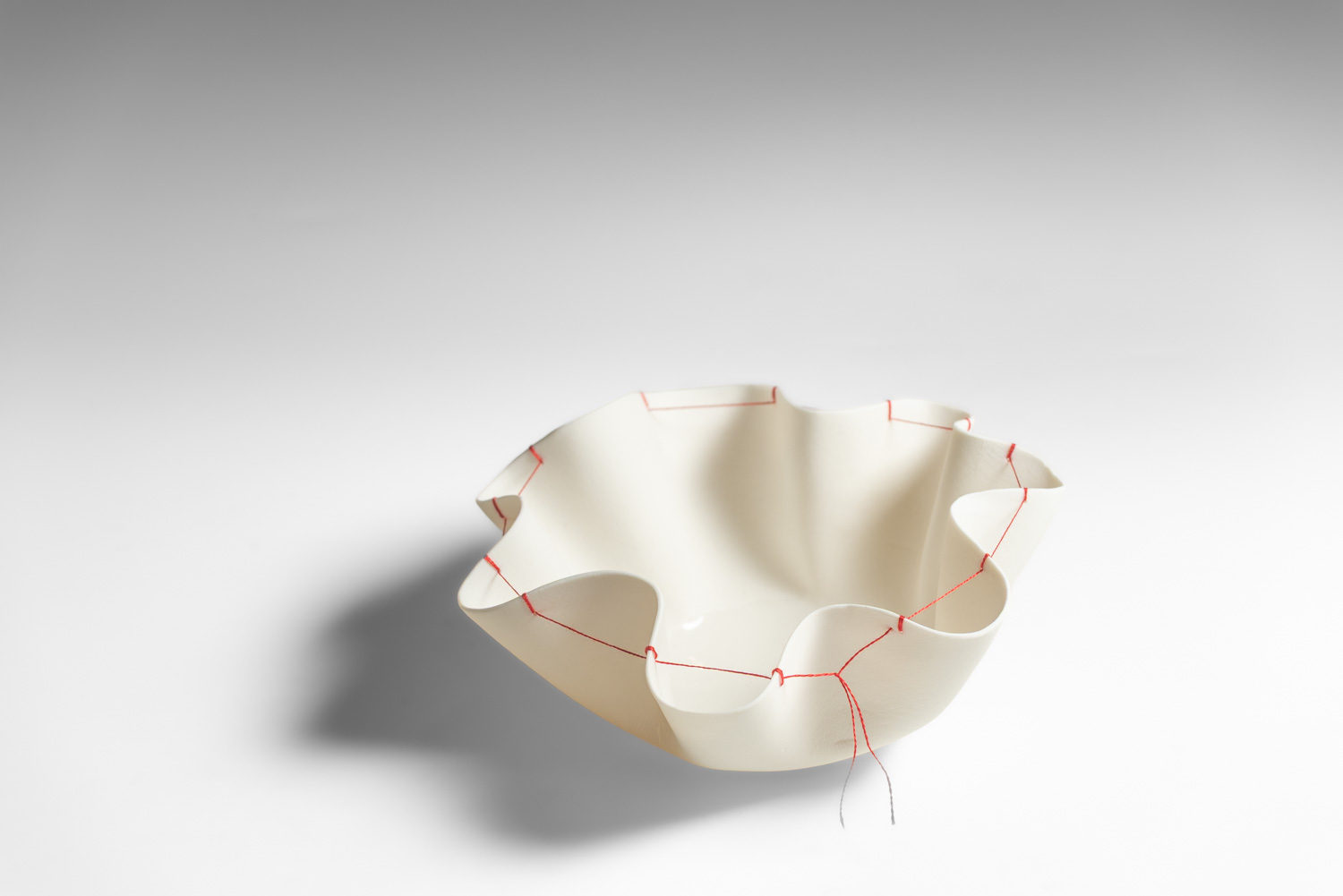
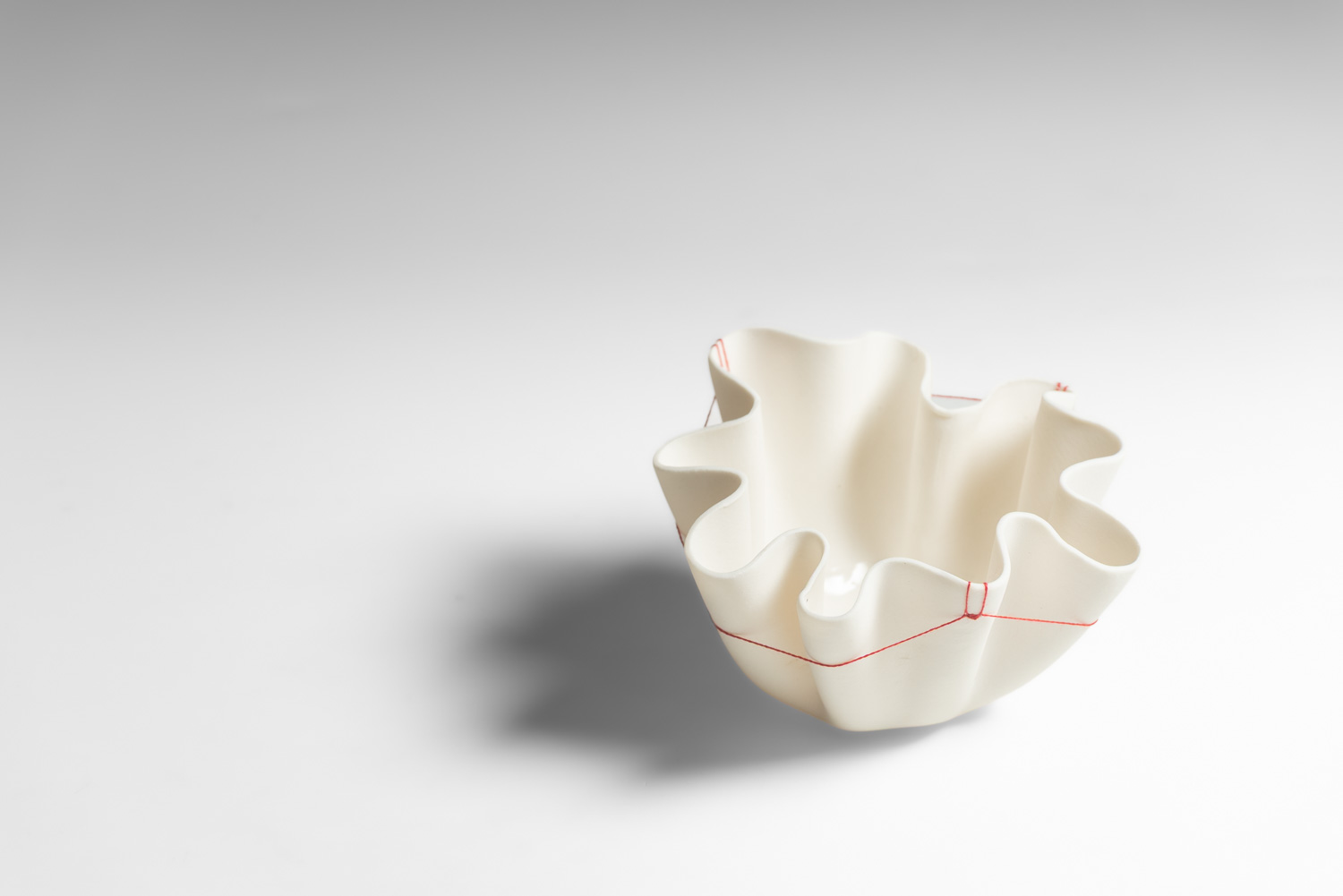
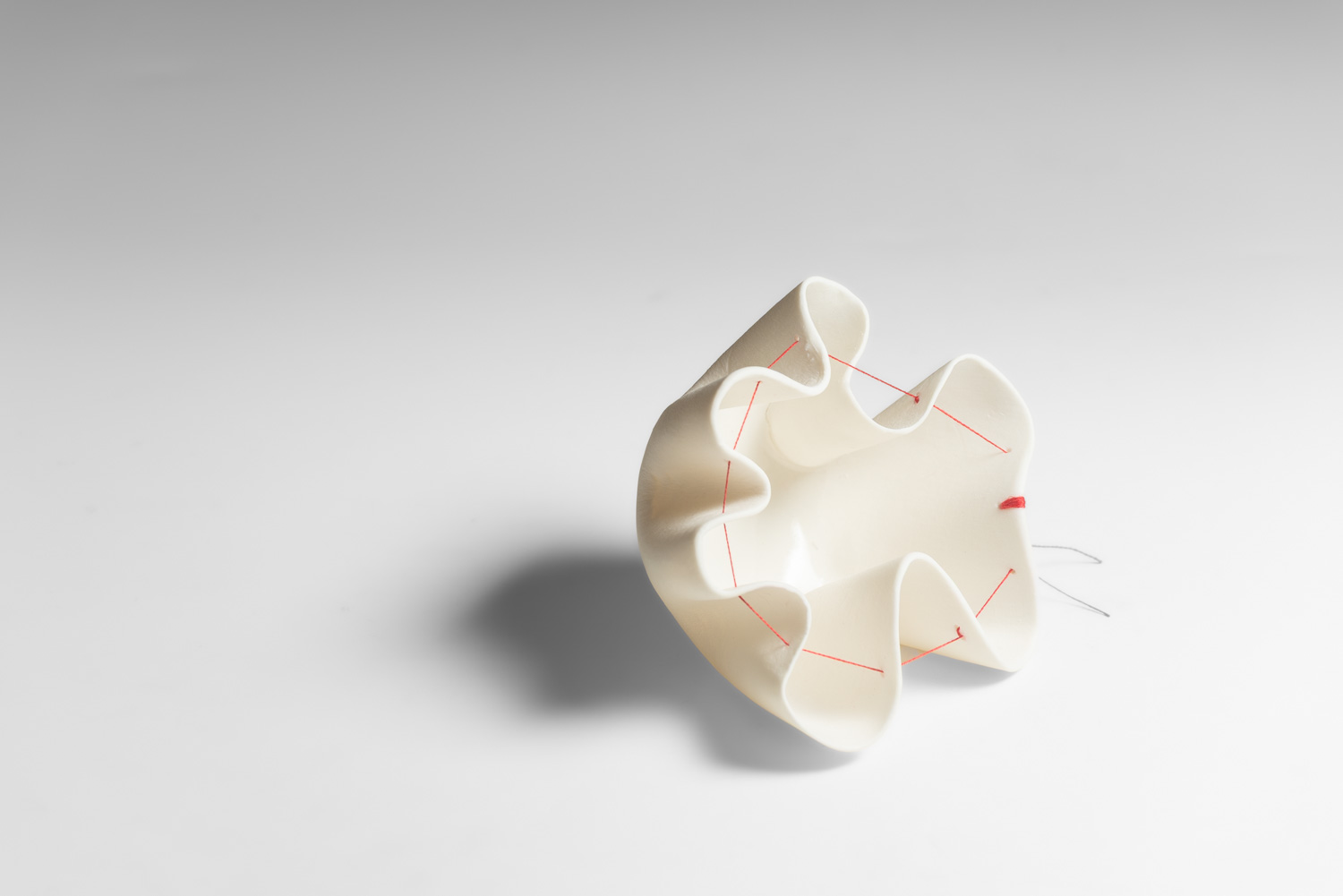
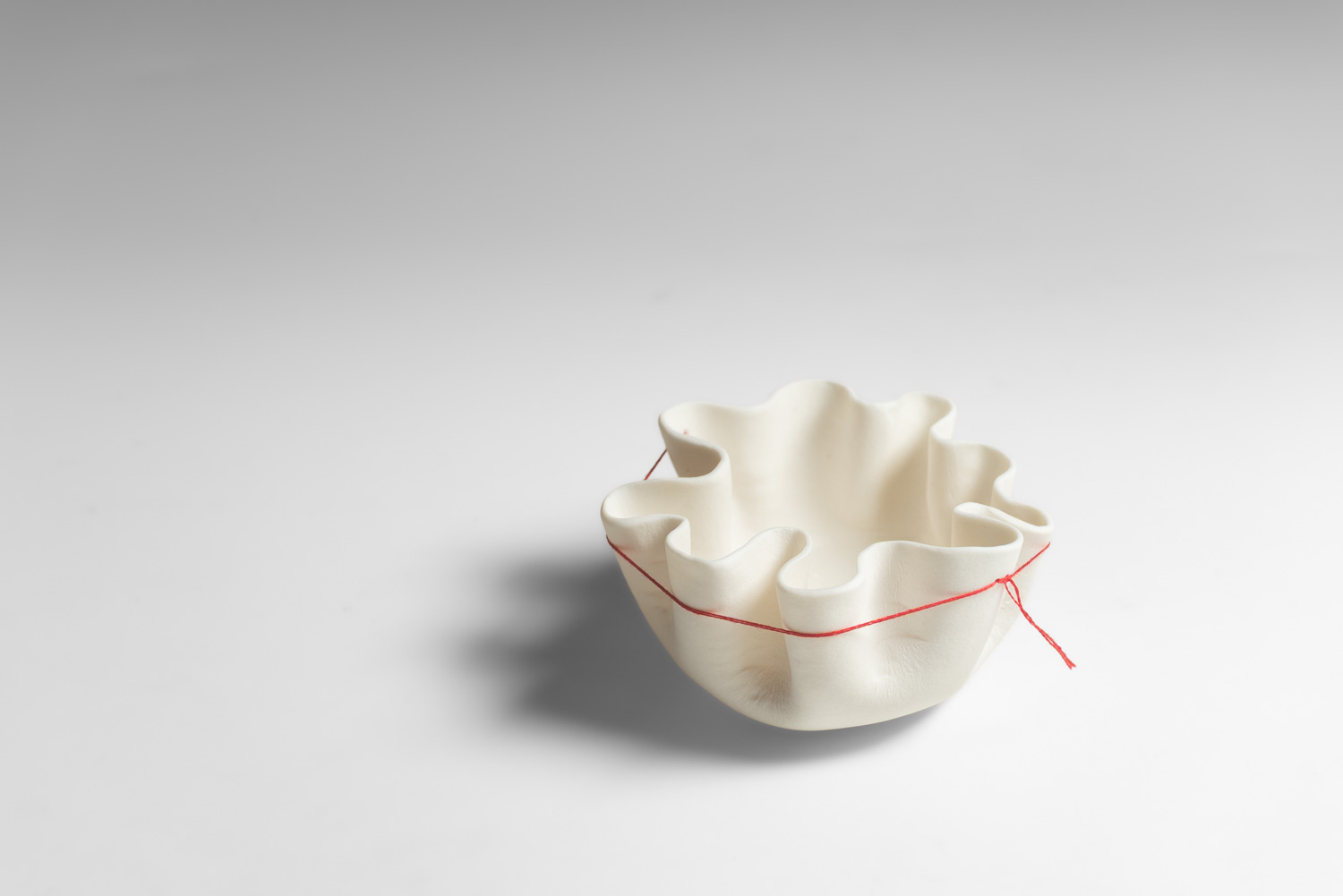
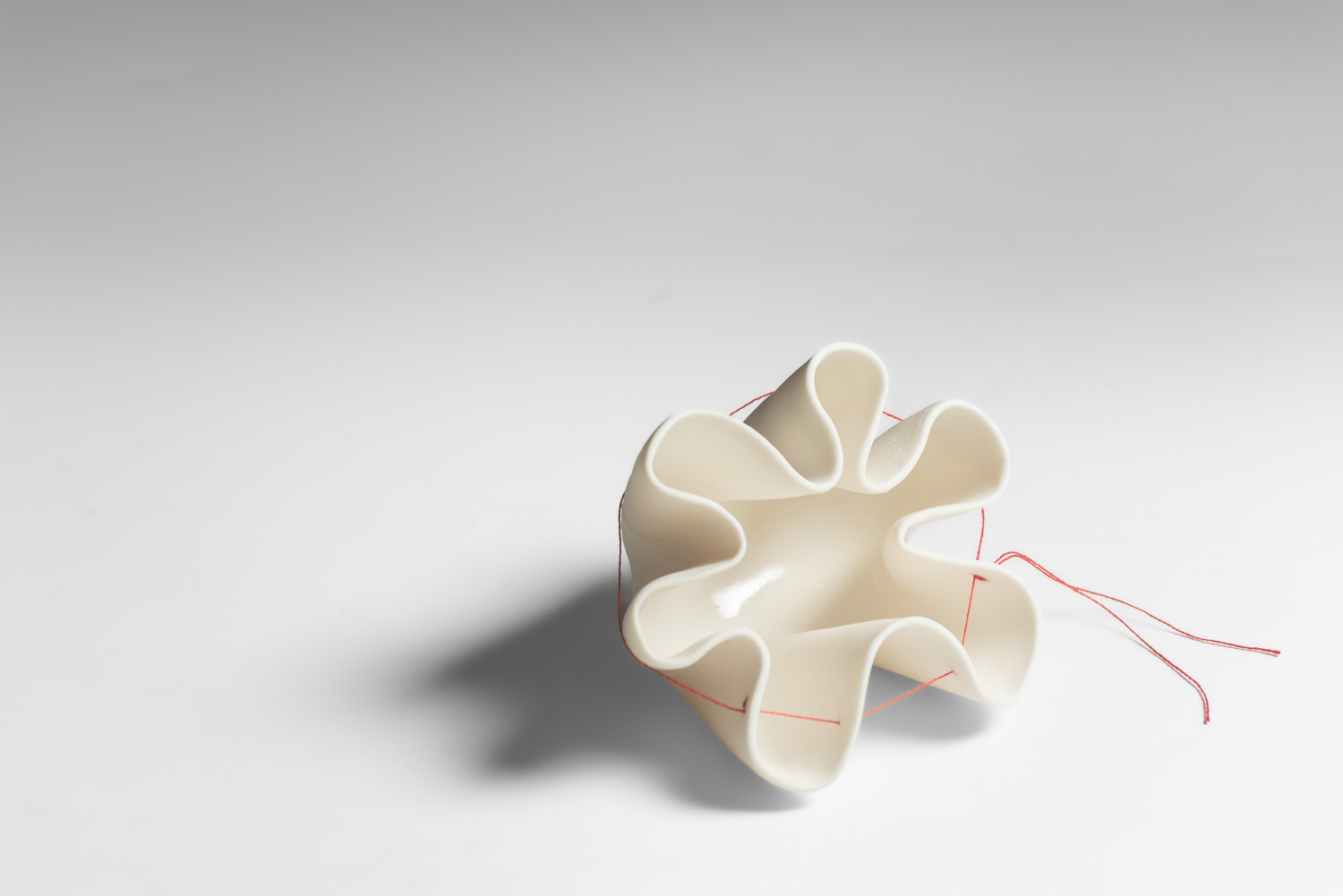
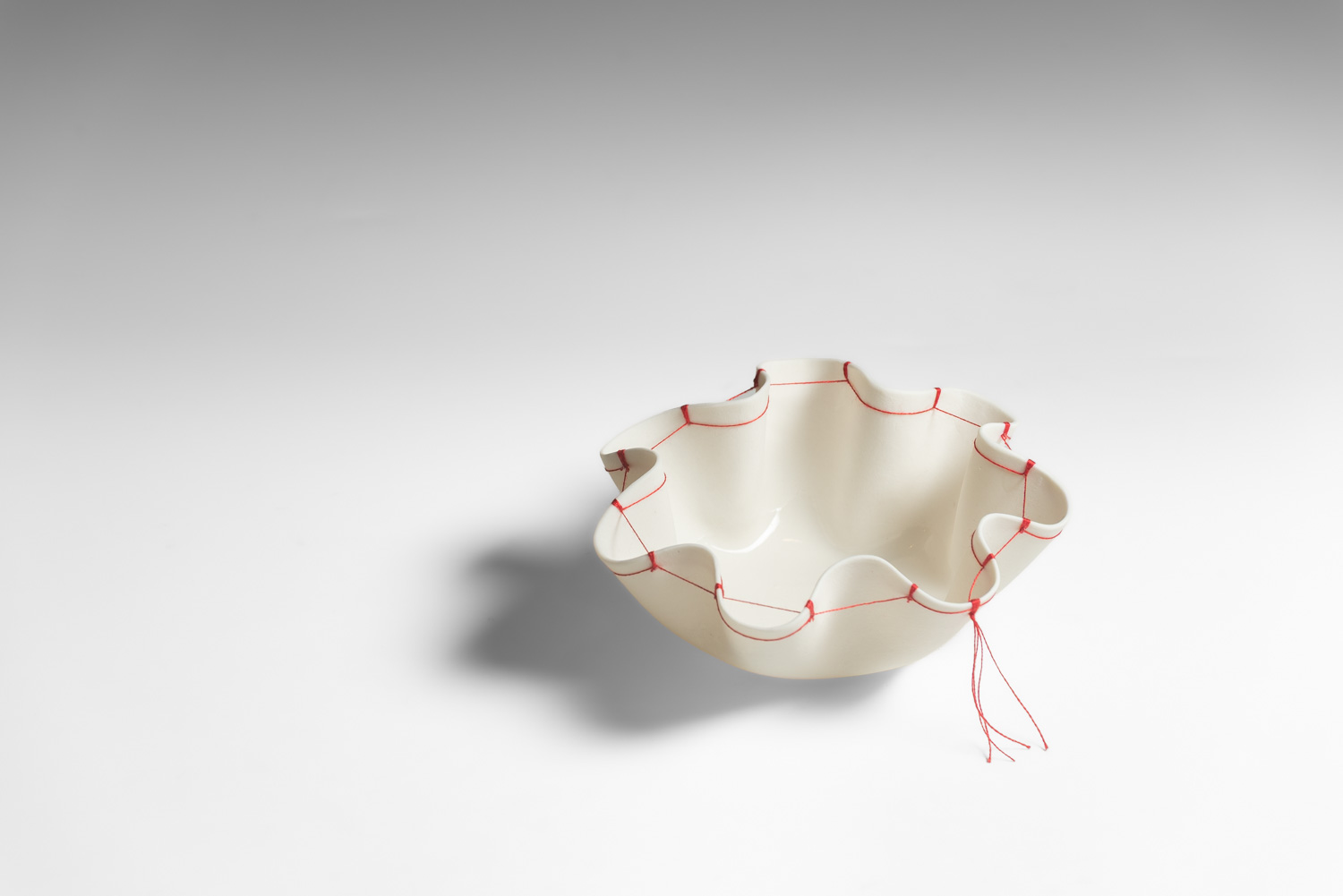
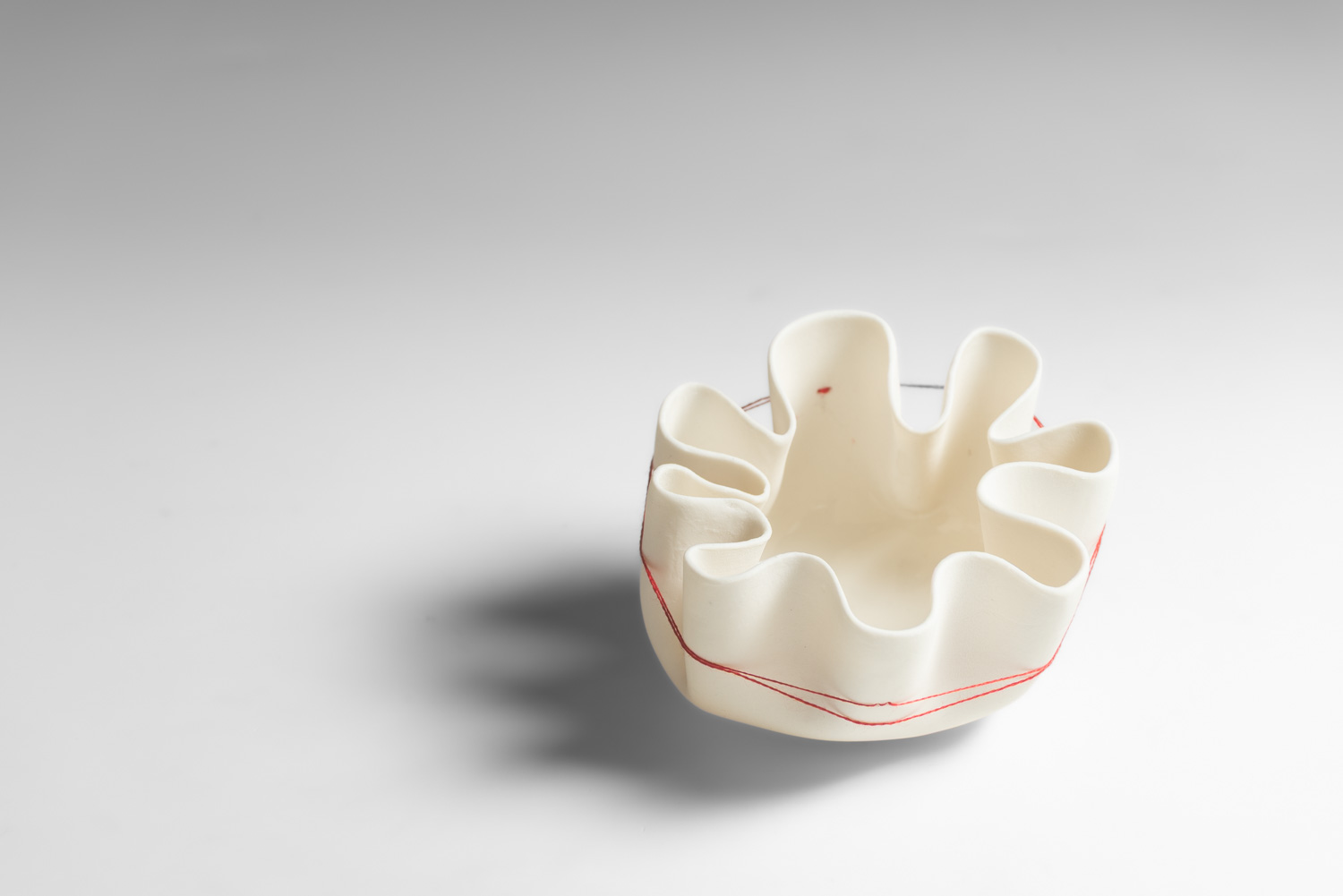
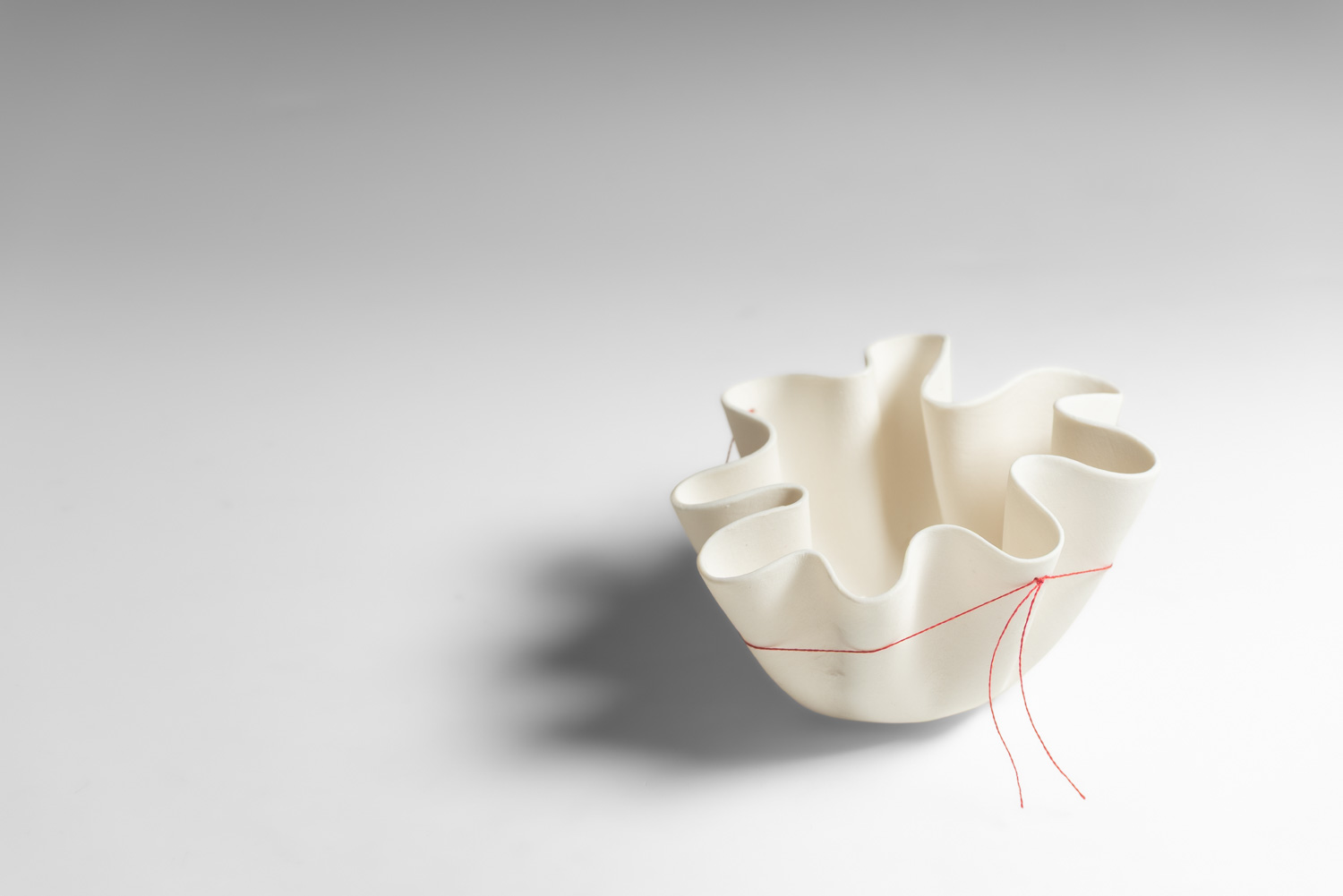
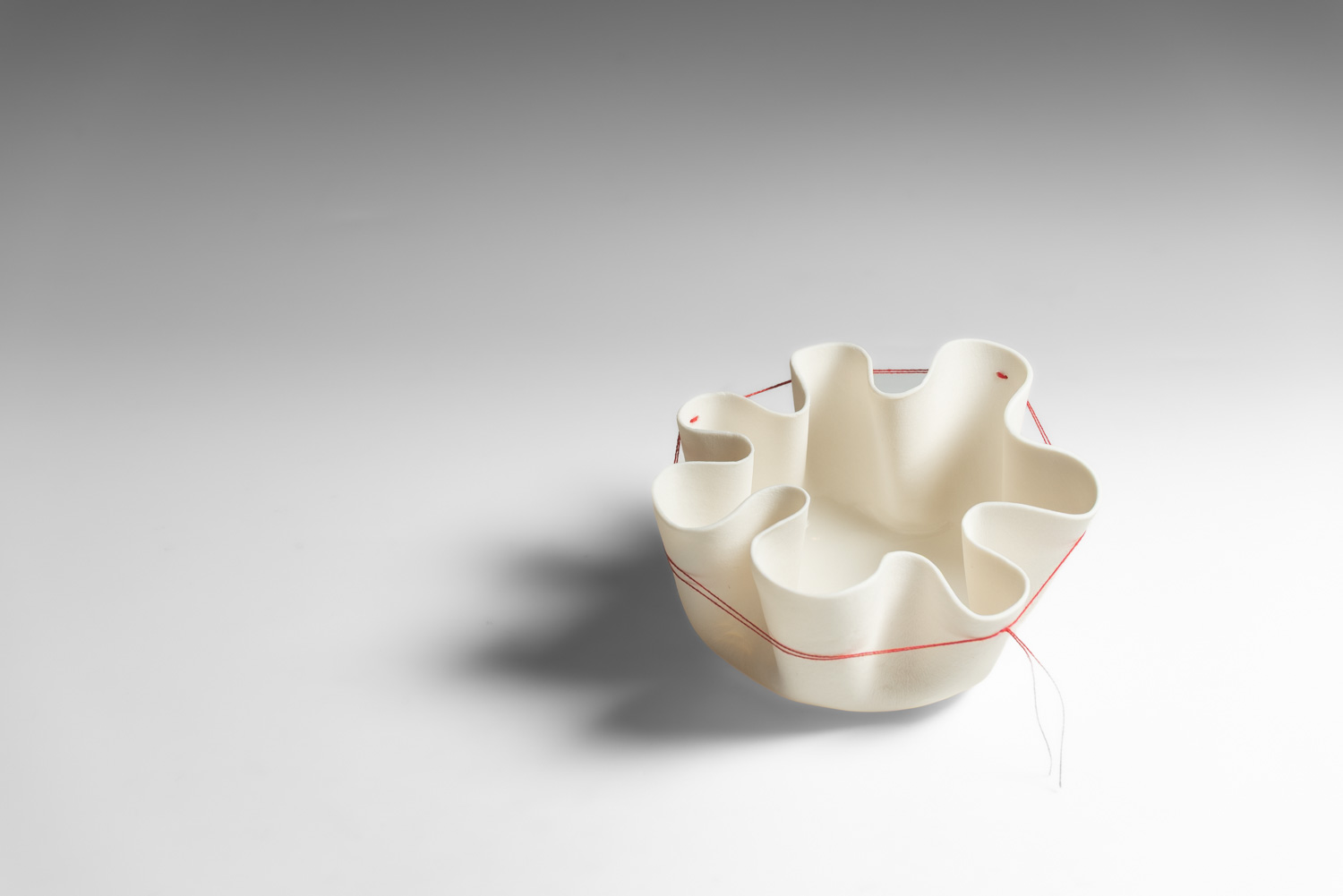
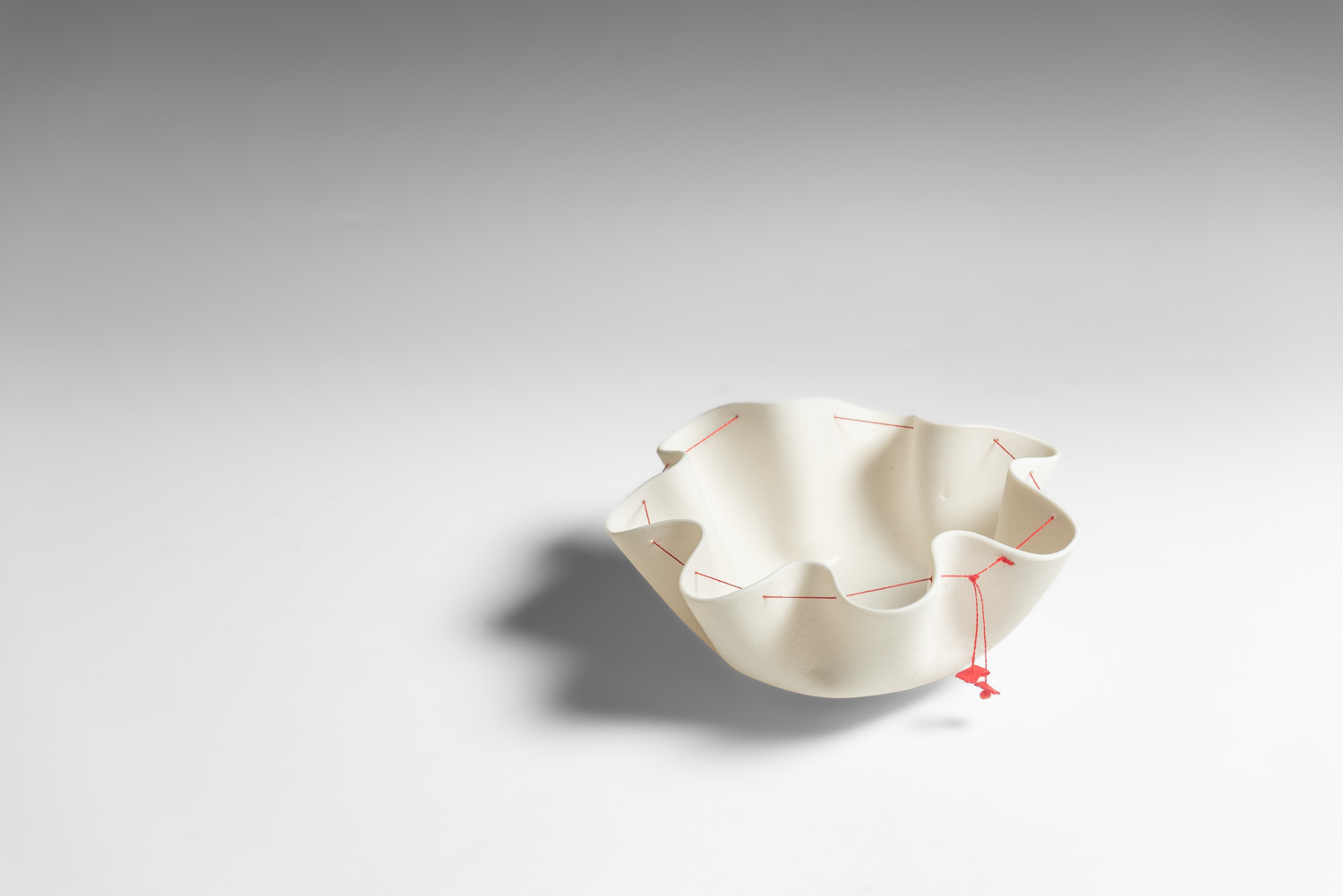
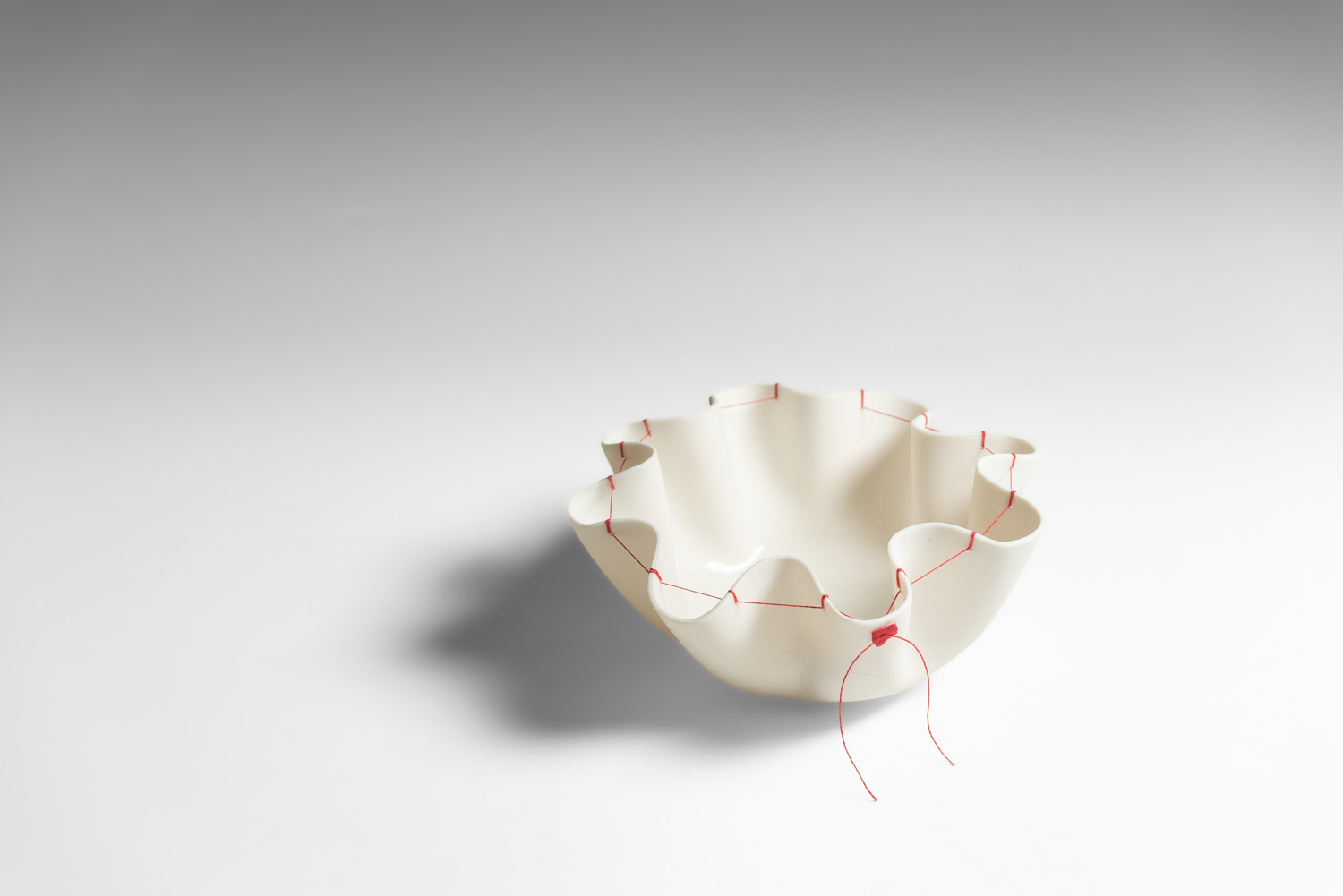
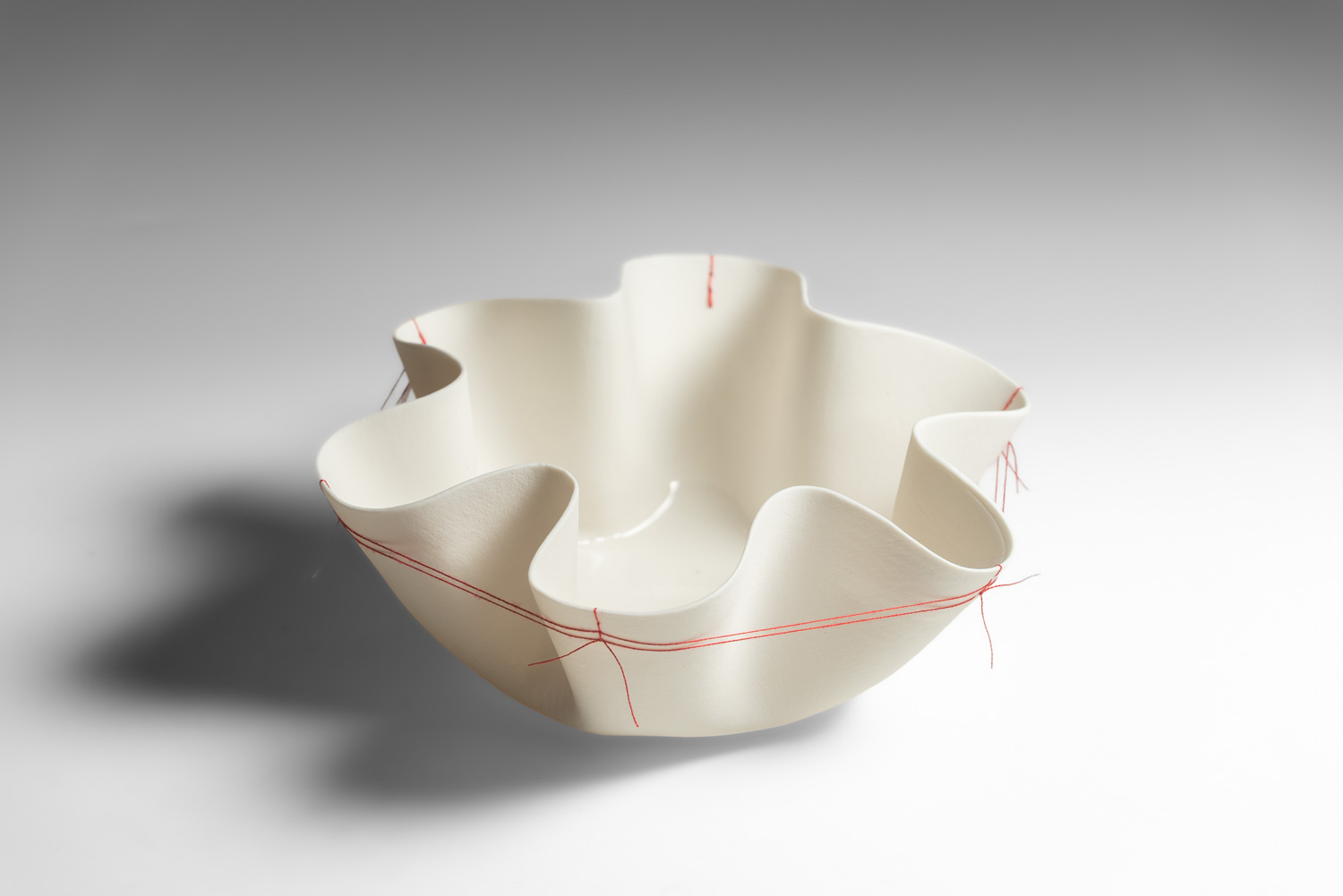
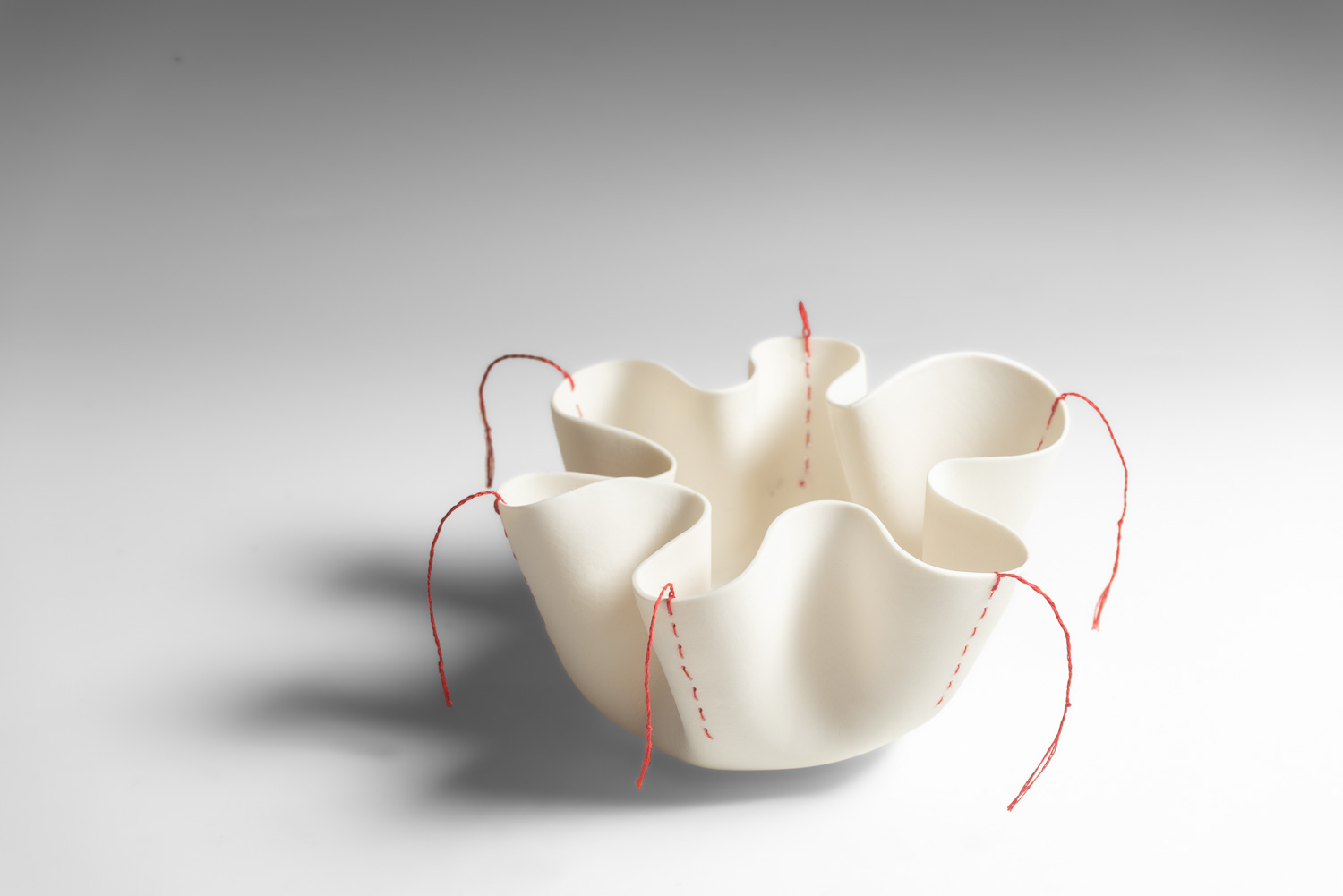
Hand-built sculptural vessels, porcelain and repurposed silk thread and cloth.
Referencing cloth draw-string bags, I create pleated and folded vessels from thinly rolled porcelain slabs, threaded with silk pulled from my mother’s sari. The vessels serve as a metaphor for my great-grandparents’ passage from Iran to India in search of religious and economic refuge and for my own journey ninety years later, from India across continents to Australia. The red thread, the colour of blood and lineage, connects generations across time and distance. Each line holds memories of people and place. Within the fibres reside narratives of whom I belong to and where I come from.
The threaded vessels are a symbol of both loss and continuity. Their fragility evokes the vulnerability of displacement, while their fired strength affirms the endurance of cultural memory across journeys and generations. They carry memories of the past and hold hope for the future. Lineage is a meditation on identity, resilience and hope.
Like all my work, this collection began with a story. Helping my aunt tidy up, I came across some old photographs which included a studio portrait of my great grandparents with my grandfather as a young boy. Talking about the photograph I learnt about my great-grandparents’ passage around 1890 from Iran to India in search of religious and economic refuge and that my grandfather was born after they settled in India. I was aware of my Persian heritage but had always assumed that my ancestors had migrated many generations ago like others in the large Parsi community in Mumbai that traces its arrival to very early times (between 8-10 centuries CE). The relative recency of the journey was a revelation that stayed with me. I started thinking about this journey again when there was recent political comment about migration and identity and reflected on my journey to Australia ninety years later. This then became the starting point for Lineage.
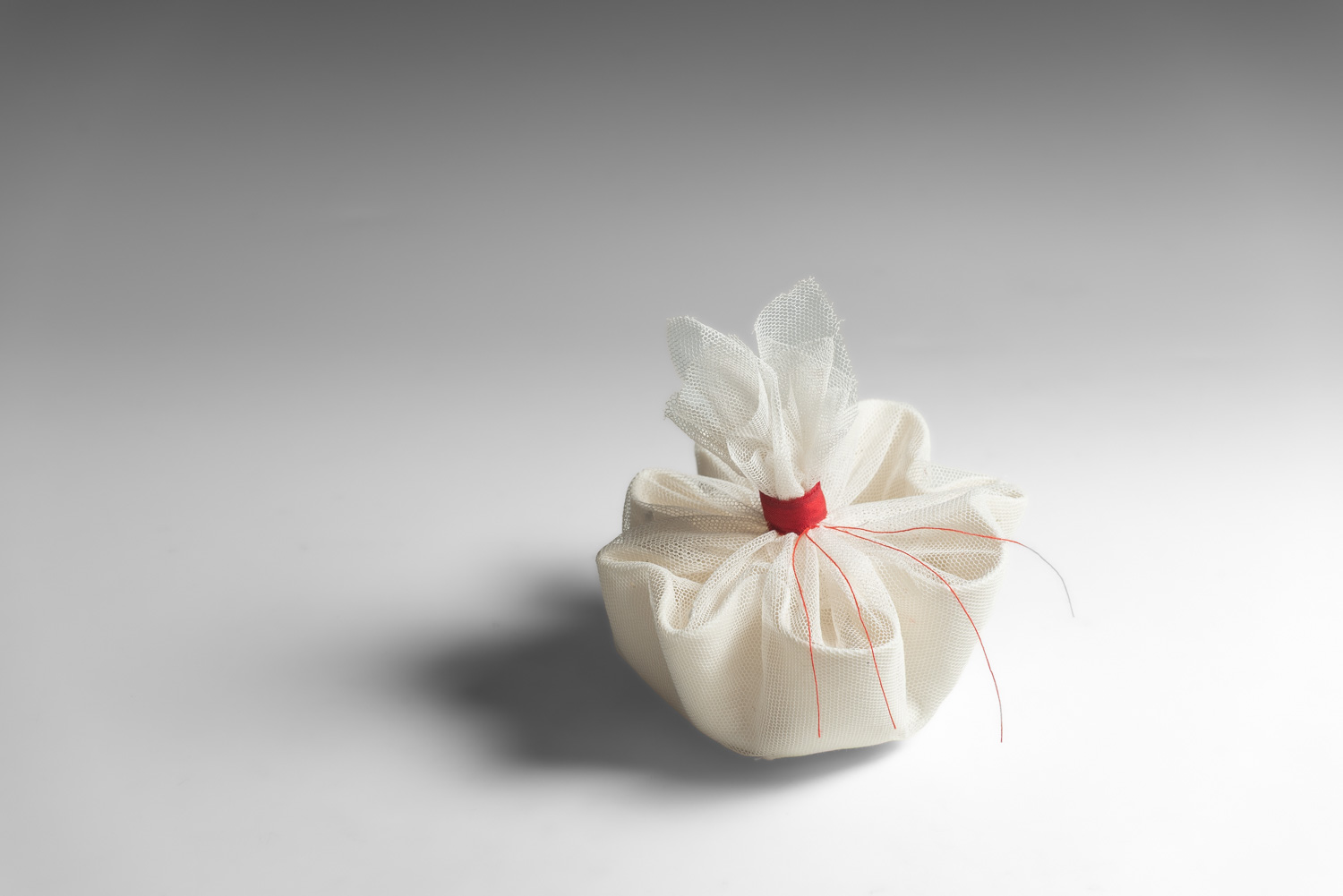
I decided to make vessels referenced on traditional cloth drawstring bags as a metaphor for these momentous journeys. Called potlis, they hold deep historical and cultural significance across India. Meaning ‘small bundle’ or ‘pouch’, the potli serves as a secure, compact container made of cloth, closed with a simple drawstring.
Cloth bundles and pouches are ubiquitous in India and potlis have always been a part of my life. I have early memories of saris stored in cloth bundles and jewellery secured in small bags. As children, we secreted treasured collections in a potli. And today, pouches made of silk, velvet or brocade serve as fashion statements to accompany Indian garments.
To make my clay potlis, I roll very thin slabs of porcelain on damp fine cloth and pleat and fold them to fashion the vessels. Openings to take thread are pierced when the vessels are leather hard. Using needle and thread, I gently thread the damp vessels to make sure that I position the holes to give me a continuous thread line along which the eye can skim when the vessel is complete. I give the same attention to the meandering rim. The vessels are glazed partially on the inside and left unglazed on the outside to highlight the texture of the fine cloth on which they were made.
This collection uses red thread, the colour of blood and lineage to connect generations across time and distance. Silk threads pulled from an old family sari are ‘stitched’ or wound and knotted into the fired vessels using the openings made during the building process. I focus on the tension of the thread and the red line as I stitch. While I aim for a continuous, elegant drawstring, I think of the line as representing journeys – long circuitous trails with pauses, crossings and junctures.
Besides the material tension between the porcelain and silk thread, I focus on the relationships between the vessels. Some hold space by themselves, while others move in pairs. The folds and negative spaces offer opportunities to nestle vessels; their lean allows for conversations between pieces. They are individually made but sit as an interconnected whole.
Light and shadow extend these relationships. Shadows cast by the porcelain folds and silk lines introduce another layer of movement and connection.
The threaded porcelain potlis are a symbol of identity, inheritance and continuity. Their fragility evokes the vulnerability of displacement, while their fired strength affirms the endurance of cultural memory across journeys and generations. They carry memories of the past and hold hope for the future.
Roshni Senapati